
Iron Bull Trailers
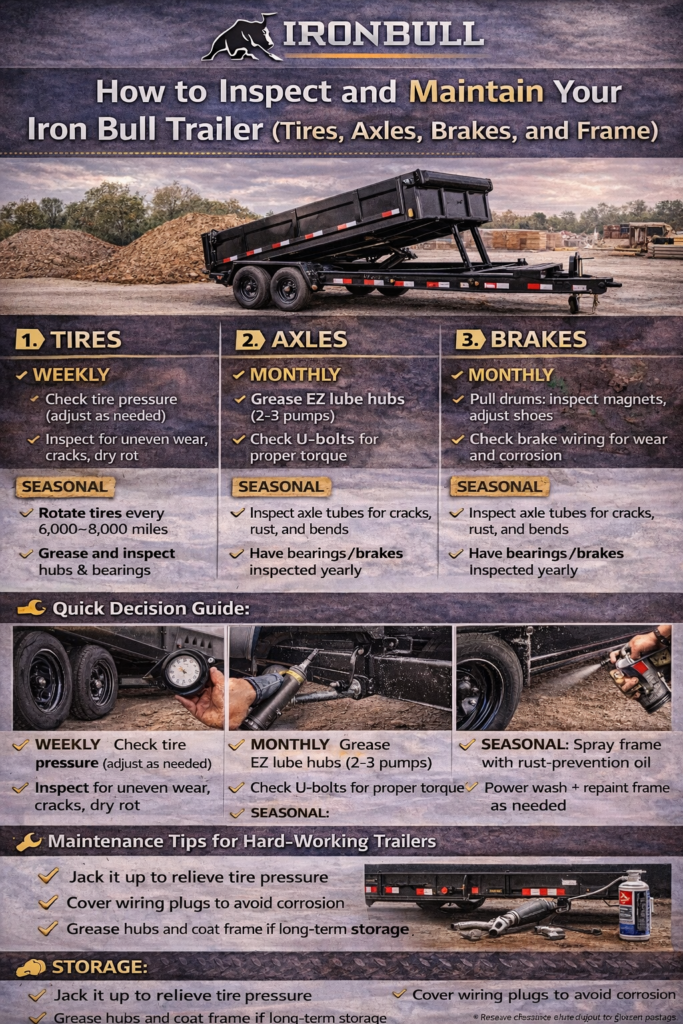
How to Inspect and Maintain Your Iron Bull Trailers (Tires, Axles, Brakes, and Frame)
Apr
Why Proper Iron Bull Trailer Maintenance Matters
Skipping routine maintenance on your Iron Bull trailers can lead to blown tires, seized brakes, bent axles, and structural damage that quickly turns into a much larger repair bill (or even a total‑loss claim).
Because Iron Bull models are often used for heavy dump loads, skid‑steer hauling, deckover equipment transport, and utility work, they routinely see stress from bumps, overloads, construction debris, and seasonal extremes. A structured inspection and maintenance routine keeps you compliant with safety rules, increases resale value, and gives you confidence in the trailer at higher speeds and on rough terrain.
This guide focuses on four core areas: tires, axles, brakes, and frame covering the most common failure points on Iron Bull DTB, DTG, UCB, UTB, ETB, EWB, FLG, THG, and similar series.
Pre‑Inspection Basics: When to Inspect Your Iron Bull Trailers
Before you dive into components, decide how often to inspect based on your use:
- Daily / pre‑trip: Visual walk‑around before every job.
- Weekly: Full tire, brake, and light check after regular use.
- Quarterly: Axle, spindle, and frame check.
- Annually: Full brake teardown, hub‑service, and frame‑and‑weld inspection.
Make this part of your contractor, landscaper, or dump‑trailer workflow so it becomes habitual, not an afterthought.
Tires and Wheels: How to Inspect Your Iron Bull Trailer
Iron Bull trailers are often spec’d with ST205/75R15, ST235/80R16, or ST235/75R17.5 tires, depending on the model (UTB, UCB, DTB, DTG, FLG, THG, etc.). Here’s what to check on each wheel:
- Tread depth: Use a tread‑depth gauge; replace tires when you’re near 3/32″ or it’s starting to expose belts or cords.
- Sidewall cracks or bulges: These indicate aging rubber or internal damage replace the tire immediately.
- Visible cuts or embedded debris: Remove nails, glass, or rocks, but watch for deeper cuts that may expose the cord.
- Tire pressure: Check with an accurate gauge when the tires are cold. Use the manufacturer’s spec or the trailer‑GVWR‑based pressure; never over‑inflate.
- Wheel condition: Look for cracks, chunked paint, or warped areas on the wheel, especially on older 14″ or 16″ steel wheels.
Iron Bull trailers with tandem or triple axles are sensitive to tire pressure balance mismatched inflation can cause uneven wear and overload one axle more than others.
Tip: Mark tires when you rotate them so you can track patterns and spot irregular wear early.
Axles and Suspension: Inspecting Iron Bull Tandem, Triple, and Single Axle Setups
Iron Bull models use 3,500 lb, 5,200 lb, 7,000 lb, 8,000 lb, 10,000 lb, and 12,000 lb axles, often with leaf or torsion‑style suspension. Here’s what to inspect:
- Shock absorption and sag: After unloading, the trailer should sit level. If one side sags consistently, the spring pack, bogie, or suspension may be worn.
- Rust, cracks, or bent metal: Check the axle housing, spring hangers, U‑bolts, and equalizers for cracks, deformation, or excessive rust.
- Lubrication and E‑Z lube hubs (if equipped):
- For E‑Z lube hubs, check grease levels through the grease‑cap inspection port.
- Ensure the grease zerks on spring hangers, brake‑mounting hardware, and suspension components are greased on a regular schedule (monthly or according to Iron Bull’s recommendation).
- Bolt tightness and fasteners: Inspect every U‑bolt nut and suspension bolt for tightness; loose hardware can allow the axle to shift or chatter under load.
For trailers like the DTB, DTG, FLG, or THG, a delayed axle or shock‑mount repair can overstress the frame and deck, leading to frame cracks near the neck or crossmembers.
Pro‑tip: If you notice a bouncing ride or the trailer driving on only three axles on tandem/triple setups, get it inspected immediately this is a sign of a failed suspension or axle hanger.
Brakes: How to Maintain Iron Bull Electric Brakes and Hubs
Brakes are the most critical safety component on your Iron Bull trailer. Most Iron Bull models use electric drum brakes, with some high‑end decks (Sniper, THG, FLG, etc.) adding electric‑over‑hydraulic disc options.
Here’s what to check:
- Brake function test:
- Use your truck’s manual override to test each hub. You should feel resistance or hear a distinct “click” and drag; no response indicates a bad magnet, wiring issue, or dead brake.
- If the brakes pull to one side only, the opposite hub is likely failing.
- Hub inspection (drum brake):
- Remove the hub and inspect brake shoes for wear, cracks, or contamination.
- Check the brake magnet for corrosion or separation from the backing plate.
- Verify that bearings and seals are clean, smooth, and properly packed; replace bearings if there’s any roughness, spin vibration, or visible damage.
- Wire harness and plugs:
- Look for cracked, stretched, or corroded wiring at the 7‑way plug, junction box, and axle junctions.
- Check for corrosion inside the plug and at the brake‑magnet connections.
- Breakaway kit (electric brake systems):
- Inspect the cable, switch, and battery; ensure the battery is charged and the system engages when pulled.
- Test the breakaway to confirm the truck’s brake controller activates the trailer brakes upon release.
If you’re a contractor or landscaper running your Iron Bull trailer daily, schedule a full brake and hub service at least every 12,000–18,000 miles or annually, whichever comes first.
For shop owners: Promote Iron Bull‑specific brake service (electric‑drum or electric‑over‑hydro disc) as a trusted, repeat‑maintenance program that builds long‑term customer loyalty.
Frame, Deck, and Welds: Inspecting the Iron Bull Frame
Iron Bull trailers use I‑beam, channel, and C‑section frames and crossmembers with varying widths and GVWRs. Unlike cosmetic issues, frame and weld problems can quickly become unsafe, so your inspection needs to be systematic:
- Spot‑rust and corrosion: Look for bubbling paint, chalky rust, or “orange” patches under the frame, near the tongue, crossmembers, neck, and fender brackets.
- Cracks and weld failures: Inspect high‑stress areas:
- The gooseneck neck on FLG/THG/ETG/DTG trailers.
- The tongue and frame junction on bumper‑pull DTB/UCB/UTB/ETB models.
- Crossmember welds and stake‑pocket welds where the deck meets the side rail.
- Deformation or bending: Stand behind the trailer and sight down the beams if they look twisted, bowed, or compressed, it’s a red flag for overhaul or replacement.
- Deck and floor condition: Check for bulging, cracked, or loose floor wood on utility models, or warping and rust on steel‑deck versions.
If you find even small cracks or fatigue marks, do not continue loading the trailer to its rated GVWR until the frame has been inspected and, if needed, welded by a qualified professional.
For Iron Bull dealers: Offer a complimentary “Iron Bull frame inspection” as a lead‑generation service that can convert into brake, suspension, or replacement‑trailer sales.
Lights, Wiring, and Safety Accessories
Even the best‑maintained trailer can get you a citation or worse if the lights and wiring fail on the highway.
- All‑light check: Turn on your truck’s lights and manually walk around the trailer to confirm each marker, stop, turn, and license‑plate light works.
- Ground issues and corrosion: Check for rust at the light grounds and where the wiring harness passes through metal or unibody parts.
- 7‑way plug and receptacle: Ensure the plug is clean and not bent, and that the truck plug seats deeply and firmly.
- Reflective tape and markings: Inspect reflectors, DOT tape, and safety markings for damage or fading; replace as needed to comply with regulations.
Because Iron Bull uses LED lighting on many models (lifetime‑style lights), verify that brightness and color remain consistent across all lights; dim or flickering LEDs may indicate a loose ground or power issue under the trailer.
Creating an Iron Bull Trailer Maintenance Schedule (Daily, Weekly, Monthly, Annual)
To keep your Iron Bull‑specific maintenance evergreen and useful, many owners benefit from a clear schedule. Here’s a simple template you can copy or adapt:
- Daily / before each haul:
- Tire pressure and visual inspection.
- Lights, coupler, and basic brake override check.
- Weekly:
- Full tire and wheel check, including tread depth and visible damage.
- Quick look at springs, axles, and obvious frame issues.
- Monthly (or every 1,000 miles):
- Lubricate hubs and suspension points.
- Inspect wiring harness, 7‑way plug, and brake magnets.
- Quarterly:
- Check for frame rust, weld cracks, and deck warping.
- Inspect suspension bushings and any torsion‑axle components.
- Annually (or 12,000–15,000 miles):
- Full hub and brake service.
- Professional frame inspection and corrosion treatment.
You can present this as a printable “Iron Bull Trailer Maintenance Checklist” that converts readers into email leads or shop visits.
When to Bring Your Iron Bull Trailer to a Service Center
Some issues are beyond a quick DIY check:
- Brakes that don’t engage or feel weak despite good adjustment.
- Visible cracks or weld failures on the frame, neck, or tongue.
- Consistent bouncing, axle sag, or uneven tire wear that persists after inflation and adjustment.
- Lights that flicker or fail repeatedly after bulb and harness checks.
Encourage readers to treat your facility as their one‑stop Iron Bull service hub, where technicians know the DTB, DTG, UCB, UTB, FLG, THG, and ETB systems inside and out. This builds trust and differentiates you from general‑shop competitors.
Conclusion: Building a Long‑Lasting Iron Bull Trailer
An Iron Bull trailers maintenance routine focused on tires, axles, brakes, and frame is the smartest way to protect your equipment, stay safe on the road, and avoid surprise breakdowns. By performing these checks on a regular schedule and bringing your trailer to a qualified Iron Bull‑aware service center when issues arise you’ll extend its life, keep your GVWR ratings legal, and maintain resale value over time.
If any part of this inspection process feels outside your comfort zone, reach out to us for an Iron Bull trailer brake, axles, or frame service. We’ll help you inspect, repair, and keep your Iron Bull performing at its best, no matter whether you’re hauling gravel, skid‑steers, or landscape materials.
CTA (Optional Add‑On):
Download our free Iron Bull Trailer Maintenance Checklist from the sidebar or contact us today to schedule an inspection and brake service for your Iron Bull DTB, DTG, UCB, UTB, FLG, THG, or ETB trailer.
