
Iron Bull Trailers
Where Are Iron Bull Trailers Made? Texas & Mexico Manufacturing Guide
Aug
Where Are Iron Bull Trailers Made?
If you’re researching where Iron Bull trailers are made, you’re probably also wondering what goes into their construction, how they are designed for demanding hauling jobs, and what features make them popular with contractors, farmers, ranchers, and equipment owners.
Iron Bull trailers are associated with Norstar, a trailer manufacturer known for producing a range of heavy-duty equipment, dump, utility, deckover, gooseneck, and other trailers. Current industry sources indicate that Iron Bull trailers are manufactured in Texas and Mexico, rather than being produced exclusively in one country.
Origin Of Iron Bull Trailers
The short answer is Texas and Mexico. Available industry information identifies manufacturing operations in both locations. A trade document also lists Norstar Trailers Mexico S. de R.L. de C.V., doing business as Iron Bull Trailers, at a manufacturing address in Chihuahua, Mexico.
This means buyers should not automatically assume that every Iron Bull trailer is manufactured in the United States. Manufacturing location can vary depending on the trailer, production facility, and model.
For buyers comparing trailers, the best approach is to check the specific trailer’s VIN, manufacturer information, documentation, and dealer listing before making assumptions about where a particular unit was built.
Who Makes Iron Bull Trailers?
Iron Bull Trailer brand associated with Norstar Company. Dealer information identifies Norstar as the company behind the Iron Bull trailer line.
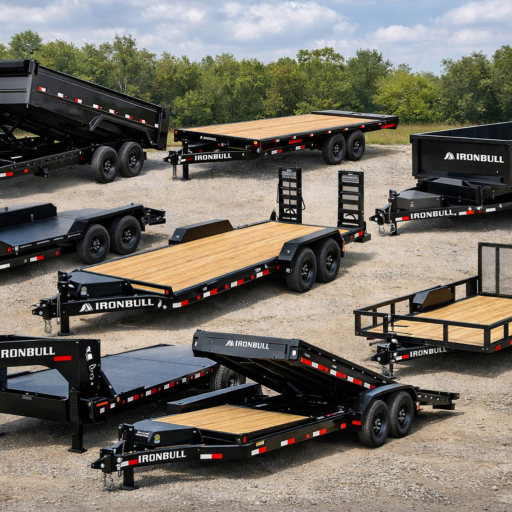
The brand offers multiple trailer categories designed around different hauling requirements. Depending on the model, buyers can find equipment trailers, dump trailers, tilt trailers, deckover trailers, and gooseneck configurations.
That variety is one reason Iron Bull trailers appeal to customers who need a trailer for everything from transporting machinery to hauling construction materials and equipment.
What Makes Iron Bull Trailers Stand Out?
One of the biggest advantages of the Iron Bull range is its focus on practical, heavy-duty construction. Exact specifications vary by model, but current Iron Bull listings show features such as substantial I-beam frames, structural channel crossmembers, electric brakes, treated-wood floors, adjustable couplers, D-rings, radial tires, and LED lighting.
Heavy-Duty Frame Construction
Many Iron Bull trailers use substantial steel frame construction designed to support demanding loads. For example, current equipment-trailer specifications include an 8-inch I-beam frame and heavy structural crossmembers on certain 14,000-lb models.
Frame dimensions and steel specifications differ between models, so buyers should always compare the exact configuration rather than assuming every Iron Bull trailer has identical construction.
High GVWR and Payload Options
Iron Bull offers trailers with different weight ratings for different applications. Current examples include equipment trailers rated at 7,000 lbs and 14,000 lbs GVWR, while other models are available with higher capacities.
The important distinction is that GVWR is not the same as payload capacity. A trailer’s usable payload depends on its GVWR minus the trailer’s empty weight.
Electric Brakes and Durable Running Gear
Many Iron Bull configurations use electric brake axles, radial tires, and suspension systems designed for work-oriented hauling. Certain deckover models, for example, feature two 7,000-lb axles with electric brakes and multi-leaf slipper spring suspension.
These components are important because a trailer’s performance depends on much more than its frame. Axles, brakes, tires, suspension, coupler, and running gear all contribute to safe and reliable towing.
Key Product Specifications
Because Iron Bull produces several trailer categories, specifications vary by model. Typical features found on current Iron Bull equipment-trailer configurations include:
- Manufacturer/Brand: Iron Bull Trailers
- Manufacturer: Norstar
- Manufacturing: Texas and Mexico
- Trailer Types: Equipment, dump, tilt, deckover, gooseneck and utility configurations
- Frame: Heavy-duty steel construction; specifications vary by model
- GVWR: Common configurations include 7,000-lb and 14,000-lb ratings, with other capacities available
- Axles: Single- and tandem-axle configurations depending on model
- Brakes: Electric brakes on many work-oriented models
- Tires: Radial, load-rated trailer tires
- Flooring: Treated wood on many equipment-trailer models
- Lighting: DOT-approved LED lighting on applicable models
- Coupler: Adjustable couplers available on various configurations
- Tie-Down Equipment: D-rings, stake pockets, rub rails, and related securing features on selected models
Always verify the specifications for the exact year and model because Iron Bull equipment can differ considerably between configurations.
Are Iron Bull Trailers Made in the USA?
This question deserves a little clarification.
Some Iron Bull trailers are manufactured in Texas, while available documentation also confirms Iron Bull/Norstar manufacturing operations in Mexico. Therefore, it would be inaccurate to describe the entire Iron Bull product line as exclusively “Made in USA.”
If American manufacturing is an important factor in your purchase, ask the dealer to confirm the manufacturing location of the exact trailer you’re considering.
Choosing the Right Iron Bull Trailer
The best Iron Bull trailer depends on what you plan to haul.
For construction machinery, an equipment trailer with ramps and multiple tie-down points can make loading and securing equipment easier. A dump trailer may be more appropriate for landscaping, construction debris, gravel, or other bulk materials. Meanwhile, a gooseneck configuration can be useful when you need a different towing arrangement and additional deck space.
Before purchasing, compare:
- GVWR
- Empty trailer weight
- Maximum payload
- Axle capacity
- Trailer dimensions
- Brake configuration
- Ramp style
- Coupler type
- Floor construction
- Suspension
- Warranty coverage
A trailer should always be selected according to the towing vehicle, intended cargo, applicable weight limits, and manufacturer’s specifications.
Final Thoughts: Where Are Iron Bull Trailers Made?
So, where are Iron Bull trailers made? The available information points to manufacturing in both Texas and Mexico, with Iron Bull associated with Norstar.
What matters most for a buyer is not simply the country of manufacture but the specifications of the individual trailer. Frame construction, axle capacity, braking system, GVWR, payload, suspension, and available equipment can have a much greater impact on whether a trailer is suitable for your particular hauling needs.
If you’re comparing Iron Bull trailers, checking the exact model specifications and VIN information is the best way to understand what you’re buying.
